I know. You are sick of hearing about AI. And debating whether AI is actually moving the productivity needle. So is it making everyone more productive? It seems so.
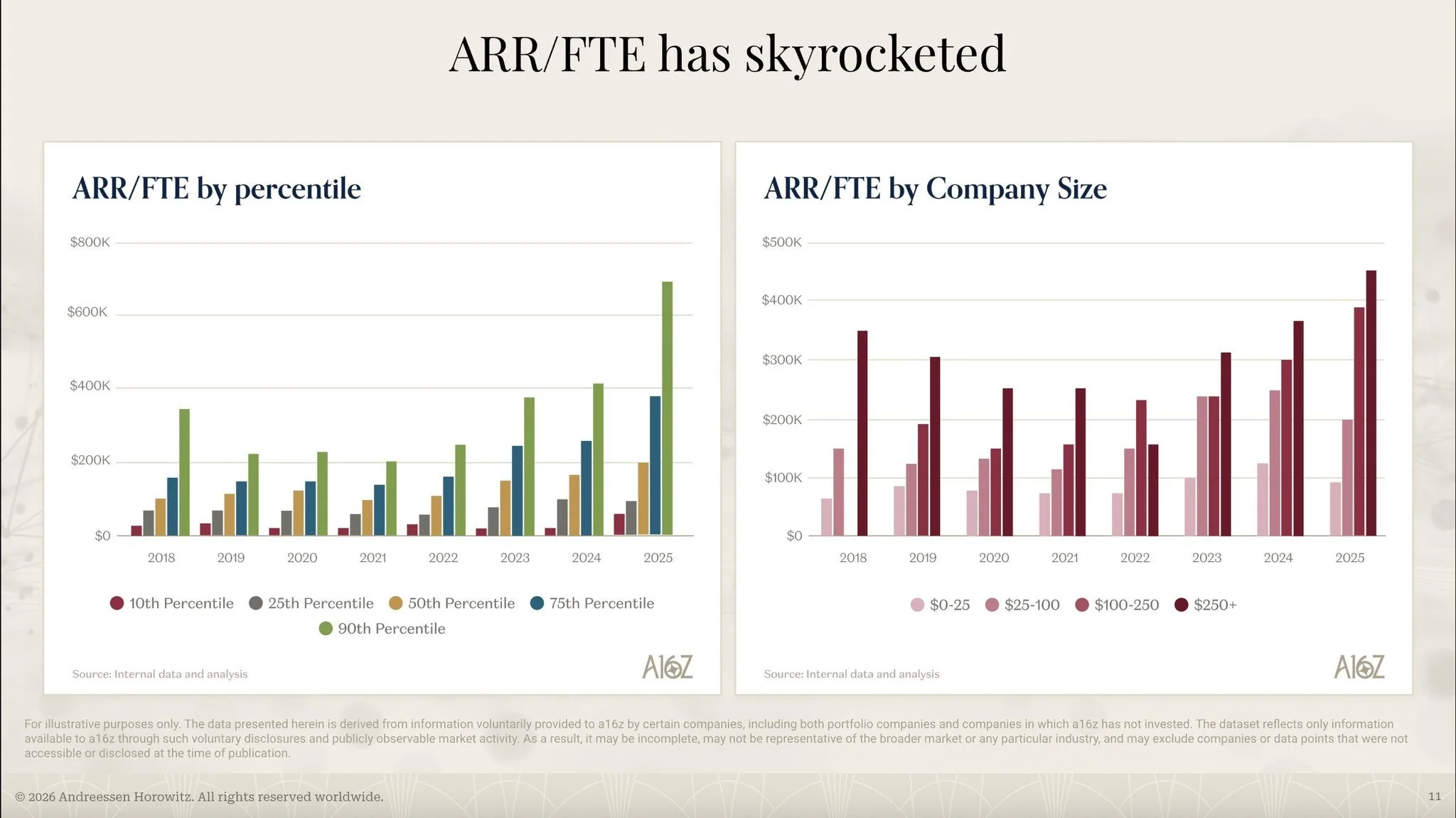
a16z’s latest benchmarks show ARR per employee at top SaaS companies has roughly tripled since 2018, with the 90th percentile now approaching about $700K ARR per FTE.
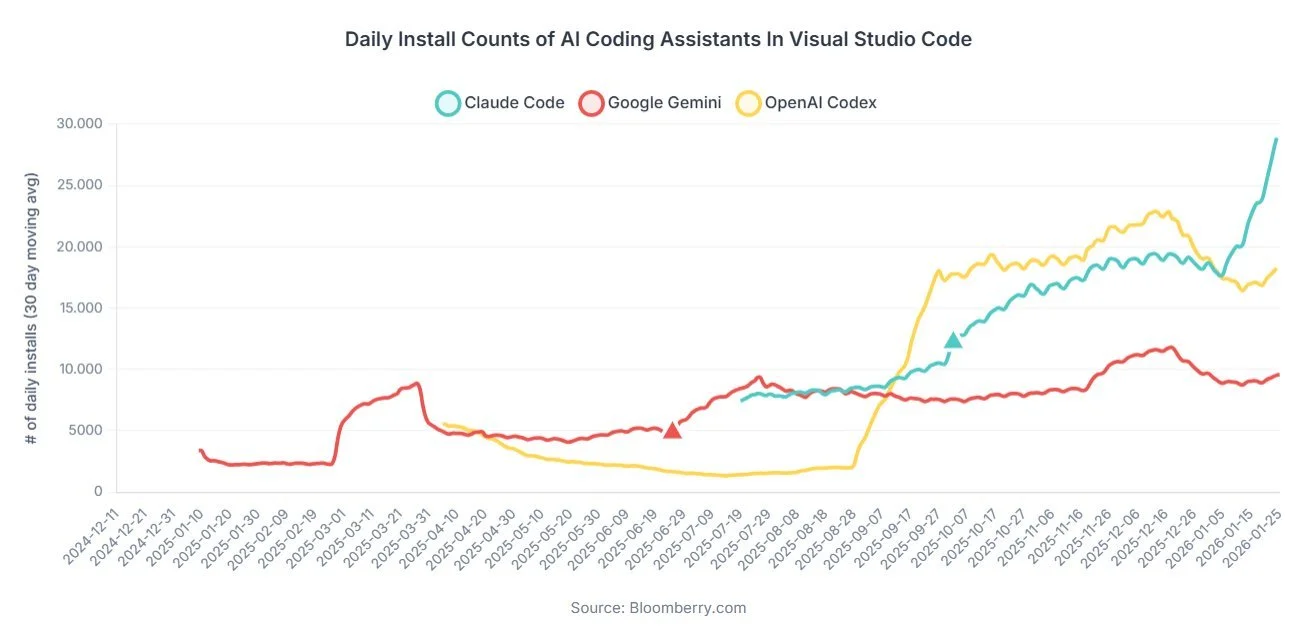
At the same time, developer behavior is loud and clear: daily installs of AI coding assistants in VS Code keep climbing, with tools like Claude Code, Gemini, and OpenAI-powered extensions seeing sustained, growing adoption rather than a fad spike. This is daily new installs on a 30‑day moving average, not just cumulative numbers creeping up in the background.
Can we attribute all of that ARR/FTE expansion to AI? Of course not. There’s pricing, product‑market fit, GTM efficiency, and macro normalization in the mix. But it’s hard to argue AI is “not working” when the highest performers are pulling away on revenue per head, while simultaneously leaning into AI tooling across their engineering orgs.
The more interesting question for operators isn’t “Is AI overrated?” but “Why aren’t we seeing these gains yet?” In most orgs, AI is still a bolt‑on assistant, not a rewired workflow in areas like coding, support, and sales ops where the leading teams are already compounding advantages.
Bottom Line: AI isn’t a silver bullet, and mis‑implemented tools can absolutely waste time but it’s clearly becoming a force multiplier, not a drag. The gap is no longer in the tech; it’s in how aggressively and thoughtfully leaders are redesigning work around it.
