Amazon's Q3 earnings are out and it was a doozy with the Prime Day shift.
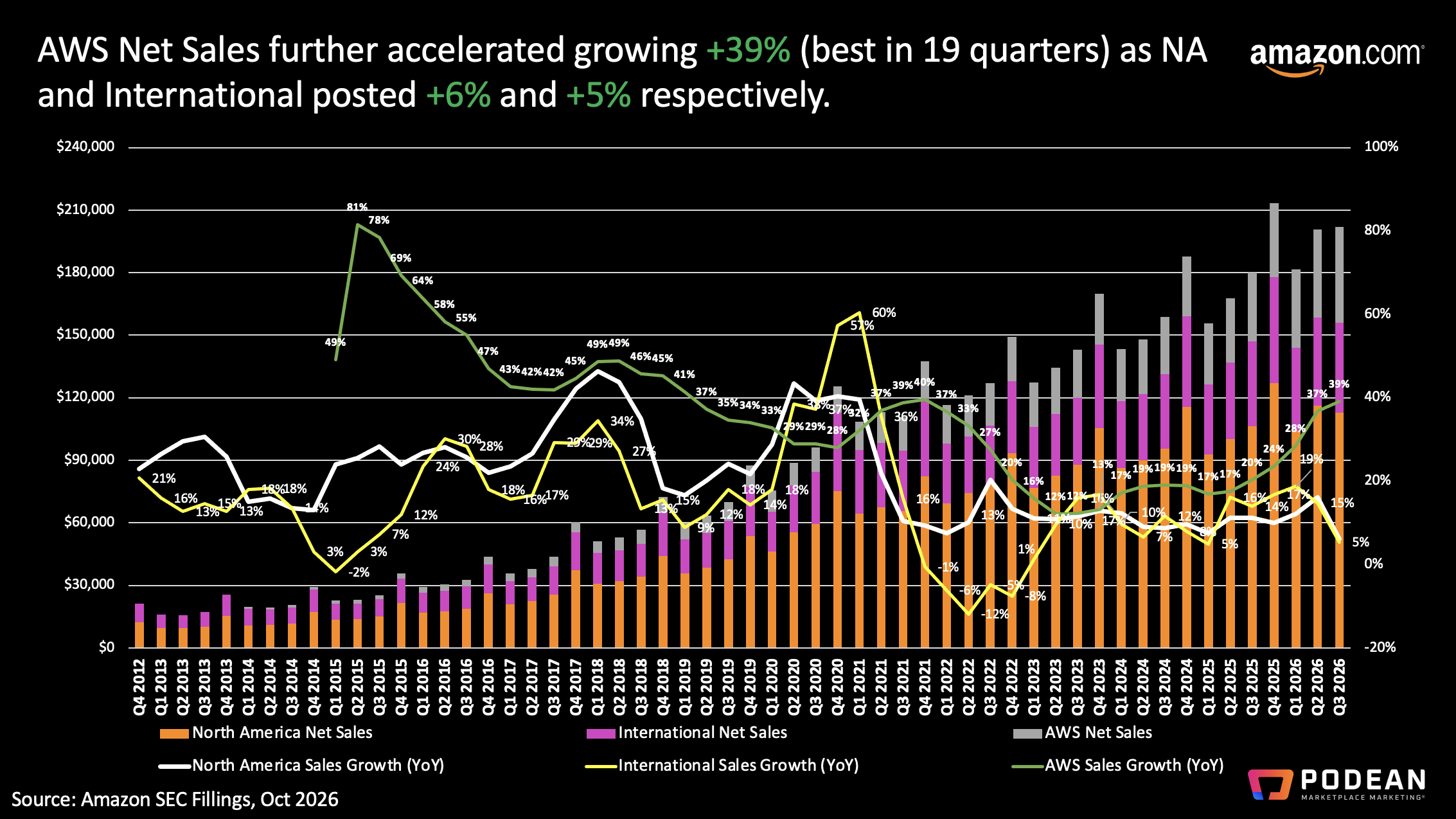
In summary, Amazon managed the business to a higher operating margin, with AWS driving growth and inventory roughly in line with sales on a YoY basis.
Three points for brands selling and advertising on the platform:
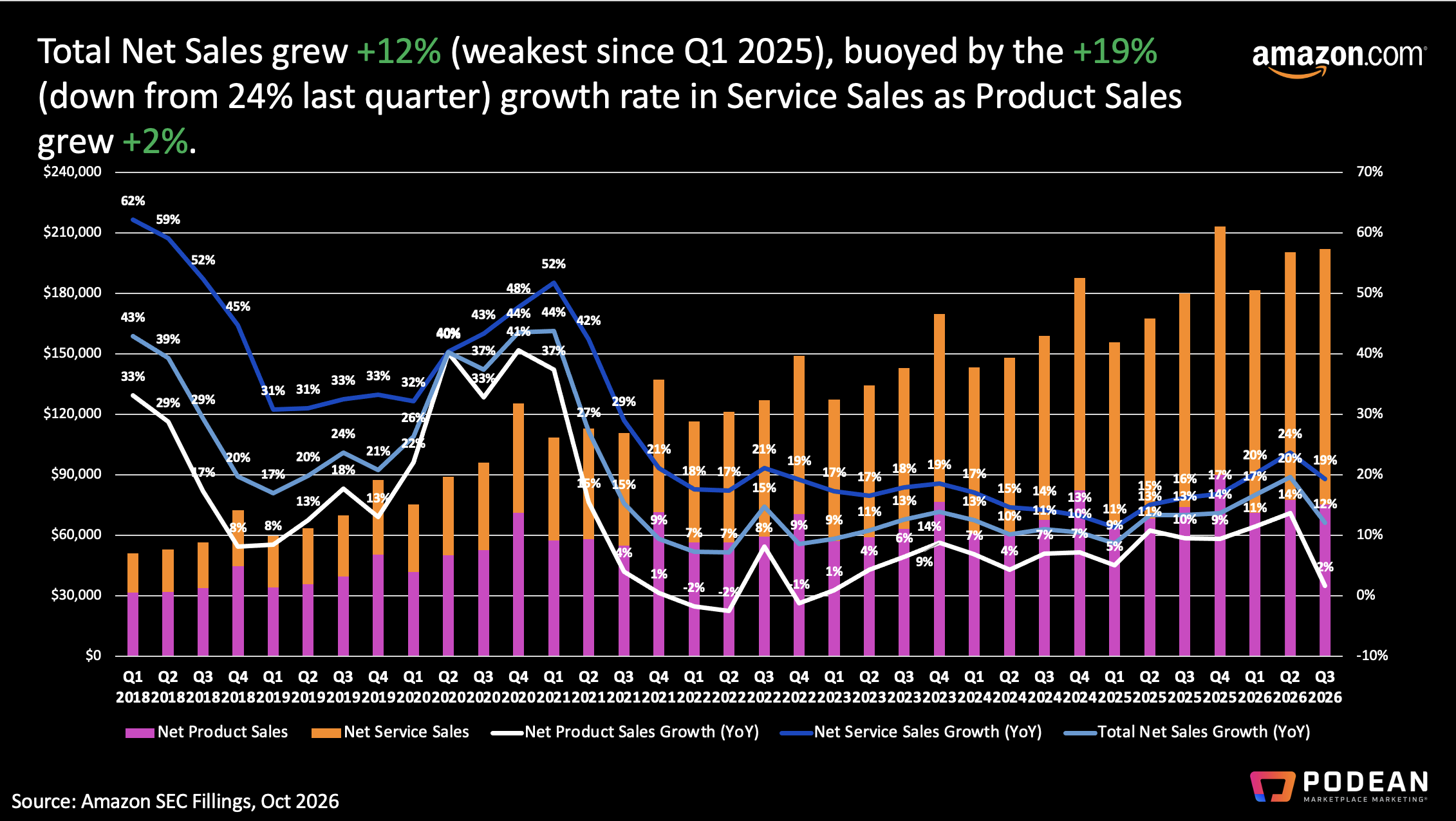
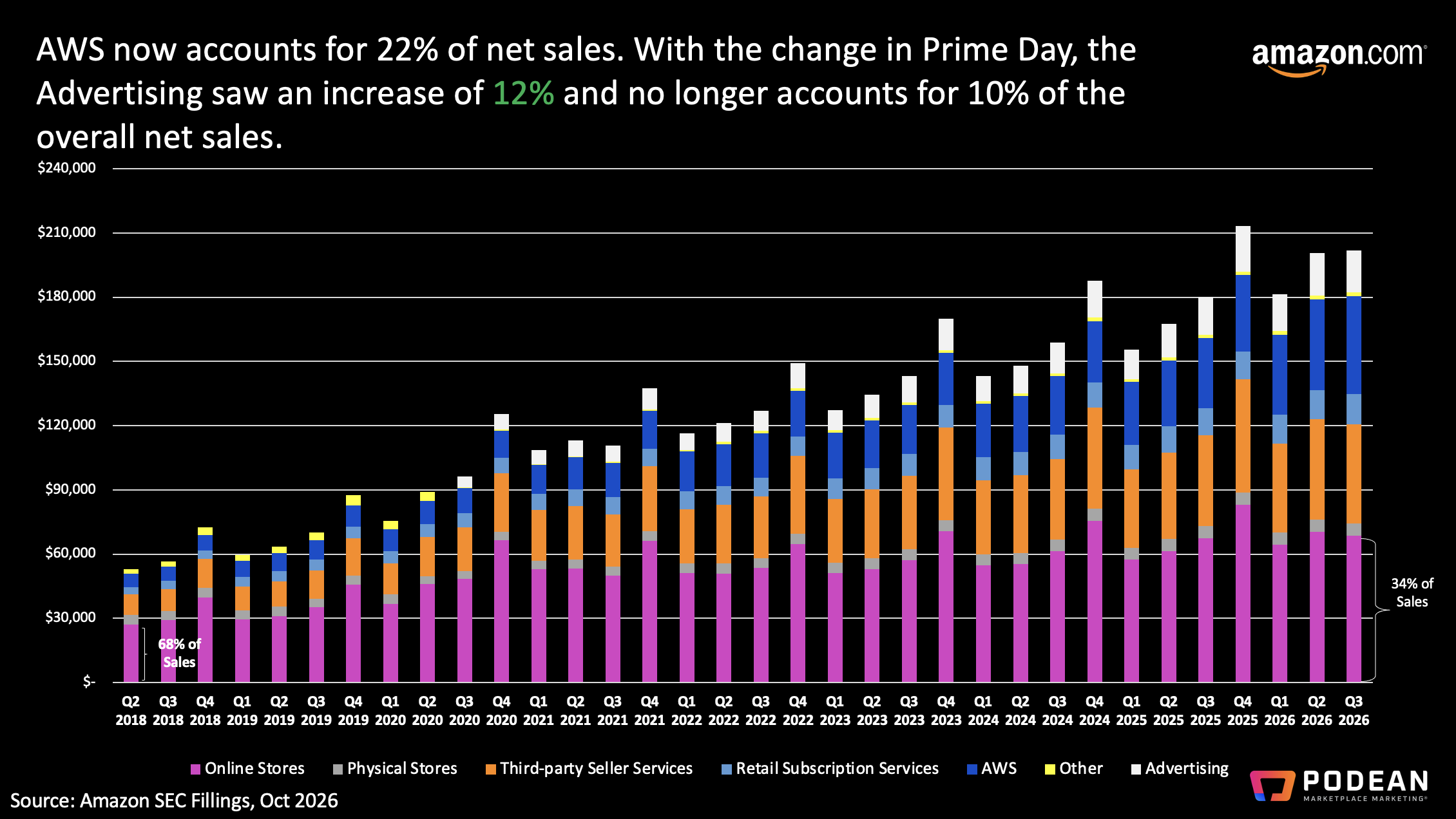
1. Prime Day timing muddies Q3, but the slowdown is real. Service sales growth fell from 24% in Q2 to 19% in Q3. Ad revenue growth fell from 26% in Q2 to 12% before currency in Q3, and Amazon's Q4 guide for high-teens ad growth still sits below the low-20s pace Amazon had been running. Online Stores grew 2% before currency, versus 8% a year ago. That matches what happened during Prime: shoppers showed up, spent carefully, and a better Fall Prime did not change the combined quarterly trend.
2. Q4 planning should protect winners and starve the tail. Paid units grew 12% and third-party seller services rose 10% before currency to $46.5B, so demand is still moving through the marketplace. Product sales grew only 2%, while Amazon inventories rose 11.6% from Q2 into the holiday quarter. Keep hero ASINs in stock. Be strict on slow movers, weak bundles and bulk inventory buys that can age into January.
3. Ad budgets should be defended with proof, not habit. Amazon guided Q4 ad revenue growth to the high teens, so spend will come back into the auction and CPC pressure will follow. Still, Q2 plus Q3 plus the Q4 guide points to a slower business than the one brands planned against earlier this year. Use ASIN priorities, margin floors and warm audiences built in DSP from custom combo audiences, not off-the-shelf audiences, and feed the system better signals through Conversions API to ensure you aren't buying a customer that's already yours. Judge the spend on incremental sales and contribution margin. Platform ROAS alone is too easy to game in a quarter this messy.