OFF TOPIC on Matt Damon's The Rip on Netflix.
Matt argued streaming hasn’t just changed where we watch movies, but what gets made, how it’s written, and who makes money from it:
On Netflix specifically, Damon says the platform now asks creators to reiterate the core plot three or four times, assuming many viewers are half-watching while on their phones interacting with their phone notifications. Additionally, big action set pieces must hit in the first 5-15 minutes of the film to keep the viewer hooked and not drifting away.
That means the product is increasingly engineered around distracted attention and algorithmic engagement, not the kind of dense, layered storytelling that rewards full focus.
Damon and Ben Affleck have tried to hack this system by structuring their Netflix deal so that not only stars but below-the-line crew share in bonuses if the film overperforms on the service.
At the same time, Netflix is rapidly building an advertising business: ads are only about 3% of overall revenue today (averaging $0.40 per month per subscriber), but ad dollars are growing much faster than subscriptions and are central to its long-term strategy.
As Netflix leans harder into advertising, the incentives to design movies that maximize time spent with early hooks, constant exposition, never-let-them-drop-out storytelling only get stronger.
Damon’s comments suggest streaming platforms function more like giant ad and engagement engines with muted creative ambition. Views & Ad Dollars > Subscriptions.
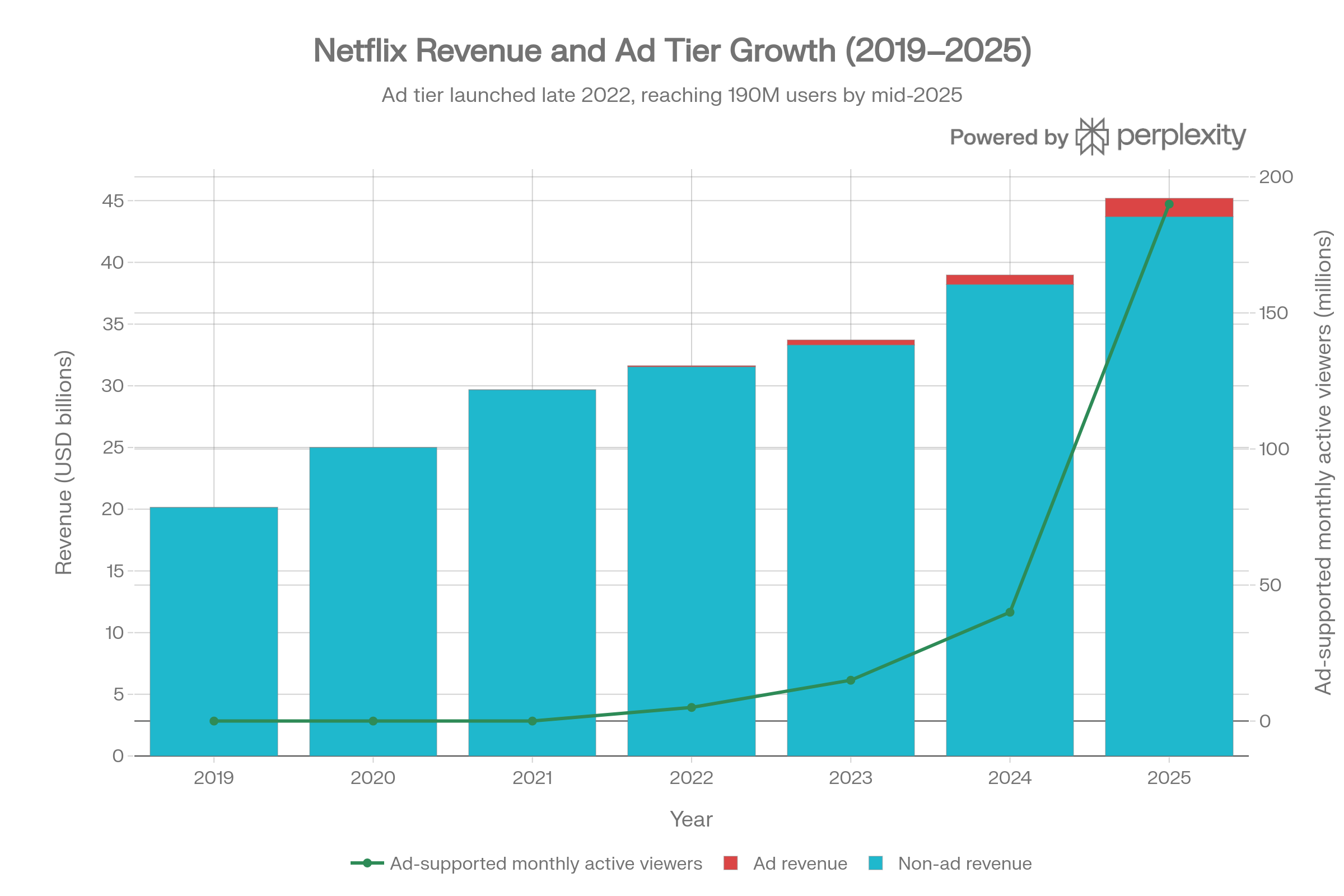
Note: Netflix modified MAUs to MAVs in Calendar Year 2025.
